Google’s May 2026 core update is now complete, and for many SEOs, publishers, affiliate sites, ecommerce businesses and content teams, the real work starts after the rollout ends. Core updates are not simple “penalties” or isolated ranking changes. They are broad adjustments to how Google’s ranking systems evaluate and reward content across the web. That means the right response is not panic, mass editing or deleting pages overnight. The right response is careful analysis.
The May 2026 core update began on May 21 and finished rolling out on June 2. It was the second confirmed core update of 2026, following the March 2026 core update. Industry reports also pointed to strong ranking volatility during the rollout, with noticeable movement around several points in late May and early June. For some websites, this may have meant sudden traffic drops. For others, it may have meant long-awaited recoveries or visibility gains.
The key question now is not simply “Did we win or lose?” The better question is: “What changed, where did it change, and what does that tell us about the quality, usefulness and competitiveness of our content?”
Why You Should Not React Too Early
One of the biggest mistakes after any Google core update is analyzing the impact while the rollout is still active. During a rollout, rankings can move several times. A page may drop, recover, drop again or settle in a completely different position. Acting too early can lead to false conclusions.
Now that the May 2026 core update has finished, the analysis window is more reliable. Google’s own guidance recommends waiting at least a full week after a core update completes before comparing performance. That makes the period after June 9, 2026 a more useful starting point for serious analysis.
The reason is simple: you want to compare stable periods, not noisy rollout days. Looking at data during the update can mix algorithmic volatility with normal daily fluctuations, seasonality, tracking issues, SERP layout changes and competitor movement.
Start With the Right Date Comparison
The first step is to define clean comparison periods. A useful approach is to compare the first stable week after the update with the week before the update started.
For this update, that means comparing a post-update period after the rollout ended with a pre-update period before May 21. For example, you could compare June 3–9 with May 14–20, or wait a few extra days and compare a full week after June 9 with the week before the update began.
Avoid comparing May 21–June 2 directly against another period as your main analysis window. Those were rollout days, and the data may be distorted by temporary ranking movement.
In Google Search Console, start with:
- Total clicks
- Total impressions
- Average position
- Click-through rate
- Top queries
- Top pages
- Device split
- Country split
- Search appearance where relevant
Do not rely only on total traffic. A website can lose clicks while impressions remain stable, which may point to lower CTR, SERP changes or AI-driven search features. Another site may lose impressions, which suggests reduced visibility across queries. A third may lose rankings only on a few high-value pages, while the rest of the site remains healthy.
Separate Sitewide Drops From Page-Level Changes
A core update can affect a whole site, a section of a site, or only certain types of pages. That distinction matters.
If almost every important section dropped at the same time, the issue may be broader. Google may be reassessing the overall quality, trust, originality or usefulness of the site compared with competitors.
If only one category dropped, the issue may be more specific. For example, a site may lose rankings in comparison pages, review content, informational guides, location pages or thin ecommerce categories, while other sections stay stable.
If only a few individual URLs dropped, avoid rewriting the entire site. Focus on the affected pages and the search intent behind the queries they lost.
A good analysis should answer:
- Which pages lost the most clicks?
- Did they lose impressions, rankings or CTR?
- Which queries were affected?
- Were the losses concentrated in one content type?
- Did competitors gain visibility for the same queries?
- Did the SERP itself change?
This helps you avoid generic conclusions like “Google hates our site” or “we need more content.” The real answer is usually more specific.
Look at Winners, Not Only Losers
When a page drops, someone else usually gained visibility. That makes competitor analysis essential.
Choose your most affected queries and manually review the current top results. Do not only look at domain authority or backlinks. Look at what the ranking pages are doing better for the user.
Ask:
- Do they answer the query faster?
- Are they more specific?
- Do they show clearer expertise?
- Do they include fresher examples or data?
- Are they better organized?
- Do they cover the topic more completely?
- Are they less aggressive with affiliate or commercial framing?
- Do they match the intent more directly?
This is especially important for review, finance, health, legal, betting, product and “best X” content. In competitive SERPs, Google may reward pages that feel more genuinely helpful and less like they were created only to capture traffic or push users toward monetized links.
Review Content Quality Beyond Word Count
After a core update, many teams immediately ask whether they need longer content. That is the wrong starting point. A 3,000-word article can still be weak if it avoids the main answer, repeats generic advice or adds sections only for SEO coverage. A 900-word article can perform well if it answers the search intent clearly and efficiently.
Instead of asking whether the content is long enough, ask whether it is useful enough.
Review affected pages for:
- A clear answer to the title or main query
- Original analysis, examples or experience
- Updated information
- Strong structure and readable formatting
- Accurate claims
- Helpful internal links
- Clear author or editorial signals
- Reduced fluff
- Better alignment with the user’s real intent
If a page is targeting “how to analyze a Google core update,” it should not spend most of its time explaining what SEO is. If a page is targeting “best tools for technical SEO,” it should not provide a generic list without explaining real use cases, limitations and comparison criteria.
Be Careful With Mass Deletions
Some sites respond to core updates by deleting hundreds of pages. This can be risky if the decision is based only on traffic loss. A page may have low traffic but still support topical authority, internal linking or long-tail visibility. Another page may need improvement rather than removal.
Before pruning content, classify pages into groups:
- Keep and improve
- Merge with a stronger related page
- Update because the information is outdated
- Redirect because the topic overlaps with another URL
- Remove only if the page has no value, no unique purpose and no realistic improvement path
The goal is not to make the site smaller. The goal is to make the site stronger.
Technical SEO Still Matters, But It Is Usually Not the Whole Story
Core updates are mainly about Google’s broader ranking systems, not simple technical errors. However, technical issues can make recovery harder. If a site has crawl problems, indexation issues, duplicate pages, poor internal linking or slow templates, strong content may still underperform.
After checking content and rankings, review technical basics:
- Index coverage
- Canonical tags
- Internal linking
- Broken links
- Duplicate or near-duplicate pages
- Core Web Vitals
- Mobile usability
- Structured data
- Pagination and faceted navigation
- Important pages buried too deep in the site
Technical fixes alone may not reverse a core update decline, but they can remove barriers that prevent better content from performing.
Consider the Wider Search Environment
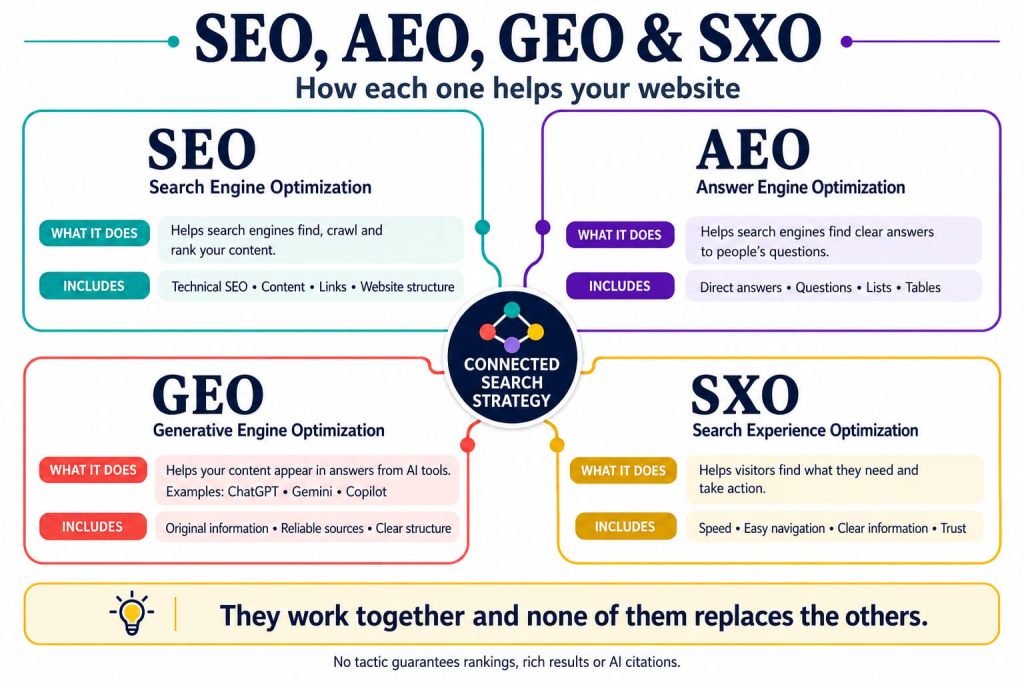
The May 2026 core update also happened in a period when Google is heavily expanding AI-powered search experiences. This does not mean the core update and AI Search changes are the same thing, but SEOs should analyze performance with a wider lens.
A drop in clicks may not always mean a traditional ranking drop. In some cases, impressions may remain steady while CTR falls because the SERP changed. AI Overviews, richer results, shopping modules, video results, forums or other SERP features can all change how users interact with the page.
That is why it is important to review real SERPs, not only rank tracking dashboards.
For important queries, check:
- Is there an AI Overview?
- Are organic results pushed lower?
- Are forums or UGC sites more visible?
- Are comparison tables or shopping blocks present?
- Are competitors getting rich results?
- Has the intent shifted from informational to commercial, or the other way around?
SEO analysis in 2026 is no longer just about ranking position. It is also about visibility, presentation and whether users still need to click.
What To Do If You Were Hit
If your site lost visibility after the May 2026 core update, do not rush into random changes. Build a focused recovery plan.
Start by identifying the affected sections and pages. Then compare them with the current winners. Look for patterns. Maybe your reviews are too generic. Maybe your informational content does not answer the query quickly enough. Maybe old pages have not been updated. Maybe affiliate sections are too prominent. Maybe your competitors show stronger experience, clearer authorship or better topic coverage.
Then prioritize changes by impact. Improve the pages that lost the most valuable traffic first. Strengthen internal links from relevant pages. Refresh outdated sections. Add original examples. Remove unnecessary filler. Make the answer clearer. Improve trust signals. Make the page feel like it was built for the reader, not only for the keyword.
The May 2026 core update should be treated as a diagnostic moment. It is an opportunity to understand how Google is reassessing your site against the rest of the web. Some pages may need deeper expertise. Some may need clearer structure. Some may need consolidation. Others may already be strong and simply need time.
The worst response is panic. The second worst response is doing nothing without analysis.
The best response is structured review: compare the right dates, identify affected pages, study winning competitors, improve content quality, check technical foundations and monitor results over the following weeks.
Core updates rarely reward shortcuts. They reward websites that consistently provide useful, reliable and satisfying content. After the May 2026 update, that should be the main lesson for every SEO team.